A healthy smile plays an important role in your confidence, appearance, and overall oral health. However, damaged, decayed, or missing teeth can affect your ability to chew comfortably, speak clearly, and smile with confidence. Fortunately, modern restorative dentistry offers several solutions to repair teeth and replace missing ones. Dental crowns, bridges, and dentures are three common dental treatments designed to restore the appearance and function of your teeth. Although they may seem similar, each treatment serves a different purpose. A dental crown protects a damaged tooth, a dental bridge replaces one or more missing teeth, and dentures replace multiple missing teeth or an entire set of teeth.
Understanding the differences between these treatments can help you make an informed decision about your oral health. In this guide, we will explore how dental crowns, bridges, and dentures work, their benefits, the treatment process, and the factors your dentist considers when recommending the most suitable option.
What Are Dental Crowns?
A dental crown is a custom-made cap that covers a damaged or weakened tooth. It restores the tooth’s shape, size, strength, and appearance while protecting it from further damage.
Crowns are commonly recommended when a tooth has extensive decay, a large filling, a fracture, or significant wear. They may also be placed after root canal treatment to help protect the remaining tooth structure. In some cases, crowns are used to restore dental implants or improve the appearance of discolored or misshapen teeth.
When Do You Need a Dental Crown?
Your dentist may recommend a dental crown if you have:
- A severely decayed tooth that cannot be restored with a regular filling.
- A cracked, broken, or weakened tooth.
- A tooth that has undergone root canal treatment and requires additional protection.
- A large filling with insufficient natural tooth structure remaining.
- A dental implant that needs a permanent restoration.
- A tooth with cosmetic concerns that can be appropriately treated with a crown.
Types of Dental Crowns
Dental crowns are available in several materials. The right choice depends on the tooth’s location, your bite, aesthetic preferences, and budget.
1. Porcelain or ceramic crowns: These crowns closely resemble natural teeth and are often chosen for front teeth because of their natural appearance.
2. Zirconia crowns: Made from a strong ceramic material, zirconia crowns offer durability and an attractive appearance. They may be suitable for both front and back teeth, depending on the clinical situation.
3. Metal crowns: These crowns are highly durable and can be useful for back teeth that experience significant chewing pressure. However, their metallic appearance may make them less desirable for visible teeth.
4. Porcelain-fused-to-metal crowns: These crowns combine a metal base with a tooth-colored outer layer, offering a balance of strength and aesthetics.
Benefits of Dental Crowns
Dental crowns offer several advantages:
- Protect weakened teeth from further damage.
- Restore normal chewing function.
- Improve the shape and appearance of damaged teeth.
- Help preserve a natural tooth when it can still be saved.
- Provide a durable restoration when properly maintained.
A crown does not replace a missing natural tooth by itself. It is primarily used to restore a tooth that remains in the mouth or to cover an implant.
What Are Dental Bridges?
A dental bridge is a fixed restoration that replaces one or more missing teeth by filling the gap with artificial teeth. Traditional bridges are generally supported by crowns attached to natural teeth on either side of the gap. Other designs may be supported by a single tooth or dental implants, depending on the circumstances. Missing teeth can affect more than your appearance. They may make chewing difficult, change the way you speak, and allow neighboring teeth to shift into the space. A dental bridge can help restore your smile and maintain a more functional bite.
When Do You Need a Dental Bridge?
A dentist may recommend a dental bridge if you have:
- One or more missing teeth next to each other.
- Healthy supporting teeth that can support a traditional bridge.
- Difficulty chewing because of a gap in your teeth.
- Changes in your smile caused by missing teeth.
- A preference for a fixed replacement instead of a removable appliance.
Your dentist will assess the condition of the neighboring teeth, gum health, bone support, and bite before recommending a bridge.
Types of Dental Bridges
1. Traditional dental bridge: This option uses crowns on supporting teeth to hold one or more artificial teeth in place. It is commonly used when suitable teeth are present on both sides of the gap.
2. Cantilever bridge: This bridge is supported by a tooth on only one side of the gap. It is appropriate only in selected situations because the supporting tooth may experience additional forces.
3. Maryland bridge: This type uses a framework or wings bonded to the backs of neighboring teeth. It may be suitable for certain front-tooth replacements and generally requires less alteration of supporting teeth than a traditional bridge.
4. Implant-supported bridge: This restoration is supported by dental implants rather than natural teeth. It may be suitable when several adjacent teeth are missing, and the jawbone and overall oral health can support implant treatment.
Benefits of Dental Bridges
Dental bridges can provide several benefits:
- Replace missing teeth with a fixed restoration.
- Improve chewing and speaking ability.
- Restore the appearance of your smile.
- Help prevent neighboring teeth from drifting into the gap.
- Provide a natural-looking replacement when properly designed.
Traditional bridges require healthy supporting teeth to be prepared for crowns. They also need careful cleaning underneath the artificial tooth and around the supporting teeth to help prevent decay and gum disease.
What Are Dentures?
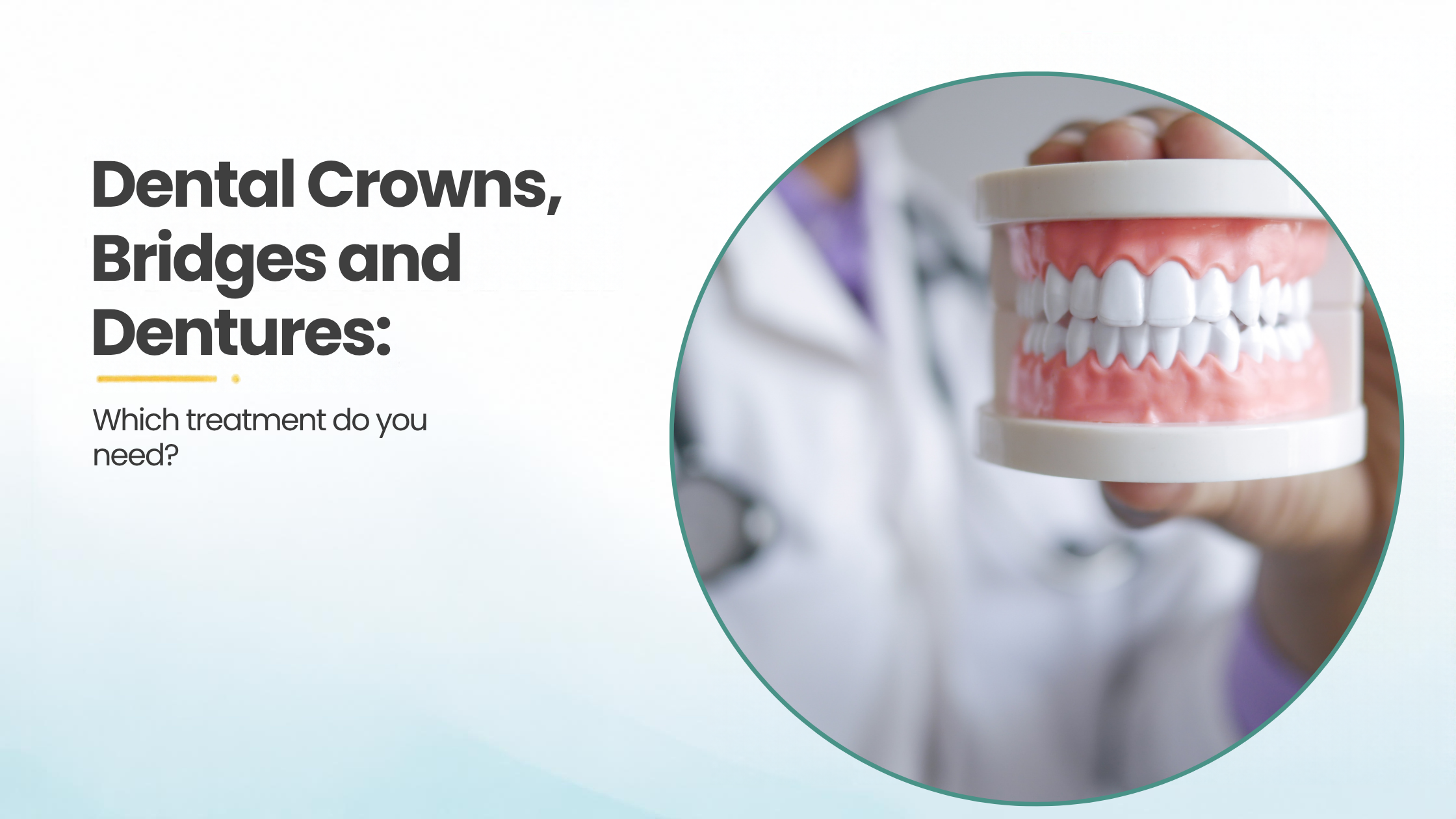
Dentures are removable dental appliances designed to replace missing teeth and surrounding tissues. They can replace several teeth or an entire upper or lower set, depending on the patient’s needs. Dentures are often recommended for people who have lost multiple teeth because of decay, gum disease, injury, or age-related dental problems. They can improve appearance, support facial contours, and help restore chewing and speaking functions. Unlike most traditional dental bridges, conventional dentures can be removed for cleaning and maintenance.
Types of Dentures
1. Complete dentures: These replace all the teeth in the upper jaw, lower jaw, or both. They rest on the supporting oral tissues and are designed to fit the shape of the gums.
2. Partial dentures: These replace several missing teeth when some natural teeth remain. They may use clasps or other attachments to help retain the appliance.
3. Immediate dentures: These are prepared before teeth are removed and placed soon after extraction. Adjustments or relining may be necessary as the gums and bone change during healing.
4. Implant-supported dentures: These use dental implants to improve retention and stability. Some designs are removable by the patient, while others are fixed and can only be removed by a dental professional.
Benefits of Dentures
Dentures offer several advantages:
- Replace multiple missing teeth or a complete set of teeth.
- Improve smile appearance and facial support.
- Help restore chewing and speech.
- Offer removable options that can be cleaned outside the mouth.
- Provide a treatment option for people who may not be suitable candidates for certain fixed restorations.
How Do You Choose the Right Dental Treatment?
Choosing between crowns, bridges, and dentures depends on the number of teeth affected, the condition of your remaining teeth, your gum health, and your treatment goals.
1. Consider Whether Your Tooth Can Be Saved
If you have a damaged natural tooth that can still be restored, your dentist may recommend a crown to protect it. Preserving a natural tooth is often preferable when it is clinically possible. However, if the tooth is too damaged to be restored predictably, extraction and replacement may need to be considered.
2. Evaluate How Many Teeth Are Missing
If you are missing one or a few adjacent teeth, a dental bridge may be suitable. If several teeth or an entire set are missing, partial or complete dentures may be more appropriate. Implant-supported restorations may also be considered based on your oral health, bone support, medical history, and preferences.
3. Check the Health of Your Gums and Supporting Teeth
Healthy gums and supporting structures are important for the long-term success of restorative dental treatments. A traditional bridge depends on its supporting teeth, so those teeth must be evaluated carefully. Dentures also need healthy oral tissues for comfort and stability. Dental implants require adequate bone support and appropriate overall oral health.
4. Think About Comfort and Daily Maintenance
Crowns and most conventional bridges are fixed in place, so they remain in your mouth during everyday activities. However, bridges require special cleaning underneath the replacement teeth. Conventional dentures can be removed for cleaning but may need adhesive products, adjustments, or relining in some cases. Implant-supported options may offer greater stability for suitable patients. Consider the daily maintenance you can comfortably manage when discussing your options with your dentist.
5. Discuss Your Budget and Long-Term Goals
Treatment costs vary according to the material, number of teeth involved, complexity of the procedure, dental laboratory fees, and location of the clinic. A crown may cost less than a larger bridge or a full-arch replacement in some cases, but the total cost depends on the individual treatment plan. Dentures can be an economical option for replacing many teeth, while implant-supported treatment usually involves additional surgical and restorative expenses.
What Is the Procedure for Crowns, Bridges, and Dentures?
The treatment process differs depending on the restoration selected.
Dental Crown Procedure
Step 1: Dental examination: Your dentist checks the tooth, gums, and surrounding structures and may take X-rays.
Step 2: Tooth preparation: The tooth is shaped to create room for the crown. If necessary, decay or damaged tissue is treated first.
Step 3: Impressions or digital scans: Your dentist records the shape of your teeth so the crown can be made to fit properly.
Step 4: Temporary crown: A temporary crown may be placed while the permanent restoration is being prepared.
Step 5: Final placement: The permanent crown is checked for fit, appearance, and bite before being cemented or otherwise secured.
How Long Do Dental Crowns, Bridges, and Dentures Last?
The lifespan of a dental restoration depends on the material, oral hygiene, bite forces, diet, smoking habits, and regular dental care. No restoration lasts forever. Dental crowns and bridges can last many years with appropriate care. Dentures may need adjustments, relining, repairs, or replacement as the mouth changes and the appliance wears.
To help extend the lifespan of your dental treatment:
- Brush twice daily using fluoride toothpaste.
- Clean between the natural teeth every day.
- Use floss threaders or other recommended aids to clean underneath bridges.
- Remove and clean removable dentures as instructed by your dentist.
- Avoid chewing very hard objects that may damage restorations.
- Attend regular dental checkups.
- Contact your dentist if you experience pain, looseness, cracks, or changes in your bite.
Good oral hygiene is especially important when you have crowns or bridges because decay can still develop in the natural tooth structure around a restoration.
Are Dental Crowns, Bridges, and Dentures Painful?
The procedures are generally performed using local anesthesia when needed, so discomfort during treatment can usually be managed. After a crown or bridge procedure, some temporary sensitivity or gum tenderness may occur. Dentures may initially feel unfamiliar and can cause sore spots as your mouth adapts. Persistent pain, swelling, bleeding, difficulty chewing, or a restoration that feels loose should not be ignored. Contact your dentist for an examination rather than attempting to adjust a restoration yourself.
Dental crowns, bridges, and dentures each play an important role in restorative dentistry. Crowns protect and restore damaged teeth, bridges fill gaps left by missing teeth, and dentures replace several or all missing teeth. The right choice depends on your dental condition, the number of teeth affected, the health of your gums, your budget, and your long-term goals. A professional dental examination can help determine which option is most appropriate for you.
If you have damaged or missing teeth, consult your dentist to explore your treatment options and develop a personalized plan. Restoring your smile can help improve chewing, support oral health, and allow you to smile with greater confidence.
Book a dental consultation with Shree Dental Center to discuss your restorative dental needs and find an option suited to your smile.